
Natural Stool Softeners: Foods, Drinks, and Habits That Actually Work


Struggling with constipation and hard stools can be a real discomfort. Fortunately, this guide to natural stool softeners is here to help. The benefits of these home remedies extend beyond mere constipation relief, offering a gentle, effective, and easily accessible solution to improve your digestive health.
From everyday foods to trusted fiber sources, we’ll explore ways to ease your system and promote regular bowel movements. So, let’s wave goodbye to occasional constipation and discover the natural path to a healthier digestive routine!

Contents
Hard, dry poop can ruin your whole day. You sit there longer than you want to, strain, and it still feels like the job isn’t finished when you’re done. This is an experience many people are familiar with. The NIDDK says about 16 out of every 100 adults (33 out of 100 after age 60) in America deal with constipation.
Thankfully, most natural stool softeners are already in your kitchen. Prunes, kiwi, oats, flaxseed, a big glass of water, and even your morning coffee are all known to help loosen stool naturally. They pull more water into your stool so it can move easily.
This guide will help you understand what a natural stool softener really is, foods and habits that actually help, and how the natural options compare against what you’d find at the pharmacy.
What Is a Natural Stool Softener?
A stool softener does exactly what it sounds like. It adds water to your stool, making it soft enough to pass without straining. A natural stool softener does this by using foods, drinks, minerals, or daily habits rather than medicine.
A stool softener is not the same as a laxative. Fiber-based laxatives soften stool and add bulk to it. Others, like senna or bisacodyl, force your colon muscles to squeeze and contract. Softeners don’t force anything. They just make the pushing easier on you.
In summary, a natural stool softener is anything that adds water to your stool without upsetting your gut.
What Makes a Good Stool Softener?
Not everything that can make you poop counts as a good stool softener. A good stool softener ticks the following boxes:
- It holds onto water in your stool. Soluble fiber and sorbitol, a natural sugar found in prunes and pears, both pull water into your lower intestines and keep it there.
- It’s gentle and can be used every day. The Mayo Clinic warns that using laxatives too much, for weeks or months, can actually make constipation worse. It weakens your colon’s ability to contract on its own. A good stool softener shouldn’t do that to you.
- It works within a reasonable amount of time. Most food-based softeners show results in 1 to 3 days. Magnesium usually works faster, within just a few hours.
- It has to fit into your actual life. Eating two kiwis a day is a habit you can keep compared to blending some complicated tonic every morning.
The Science: Fiber, Water, Magnesium, and Gut Bacteria
Your digestive system pulls water out of everything you eat. So, stool can become hard when it sits in your colon too long, or when you didn’t have enough water and fiber going in to begin with.
- Soluble fiber: It dissolves in water and turns into a gel that traps moisture inside your stool. Oats, beans, apples, chia, and psyllium all have plenty of it. Insoluble fiber, found in wheat bran and vegetable skins, adds bulk and helps things move along faster. The Mayo Clinic recommends aiming for about 25 grams a day if you’re a woman, or 38 grams if you’re a man under 50. Add it slowly over a few weeks, or you’ll deal with gas and bloating.
- Water: If you eat more fiber but don’t drink more water, you can end up with a bigger stool that’s still dry. Harvard Health recommends 4 to 6 cups of water a day.
- Magnesium: It pulls water into your intestines through a process called osmosis. In one trial, women with mild to moderate constipation took magnesium oxide for 28 days. They ended up with more bowel movements and softer stools than the group given a placebo. You’ll find magnesium naturally in leafy greens, pumpkin seeds, almonds, and black beans.
- Gut bacteria: These tiny microbes break down fiber into short-chain fatty acids, which help keep your colon moving. Foods like yogurt, kefir, and sauerkraut feed your gut bacteria and add more of them. The research on probiotics for constipation isn’t detailed yet, so think of fermented foods as extra help, not a fix on their own.
The Best Foods That Soften Stool Naturally
- Prunes and prune juice: Prunes contain fiber and sorbitol. In one randomized crossover trial, 40 adults with constipation ate 50 grams of prunes, about 5 or 6 of them, twice a day for 3 weeks. They had more complete bowel movements each week and better stool consistency. Prune juice has less fiber than the whole fruit, but it still contains sorbitol, so it still does the job.
- Kiwi: One trial had adults eat two gold kiwifruits a day for 4 weeks. The results matched a fiber-matched dose of psyllium, but with less straining. A separate US trial, covered by Harvard Health, found green kiwi worked just as well and caused fewer side effects than prunes or psyllium.
- Pears, apples, and apple juice: Pears and apples both contain soluble fiber and sorbitol, and you get both from their skin. Apple juice loses the fiber part but keeps some sorbitol. That’s why it often gets suggested for toddlers. Adults get more benefit from eating the whole fruit.
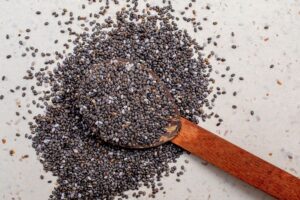
- Flaxseed and chia seeds: Both swell up into a gel once they come into contact with liquid. That’s exactly what you want happening inside your colon. Ground flaxseed works better than whole seeds, since whole ones can pass straight through undigested. Stir a tablespoon into your oatmeal or yogurt, and have a glass of water with it.
- Olive oil: A tablespoon on an empty stomach is an old home remedy, though it is more tradition-backed than research-based. It’s a low-risk extra option to try, not something to start with.
Drinks That Help: Water, Hot Beverages, and Coffee
Fluids might be the least known natural stool softener out there. If you’ve already added more fiber and nothing’s changed, you’re probably not drinking enough water.
Another option is a hot drink. Research summarized by the National Library of Medicine found that caffeinated coffee got the colon moving about as much as a full meal does. That’s 60% more than water and 23% more than decaf. While coffee is a stimulant, it works best when your stool is already soft enough to move on its own.
A gentler option is to squeeze a lemon into warm water. There’s no proof that the lemon itself does anything special. But a warm glass of fluid on an empty stomach hydrates you and gives your gut a little nudge.
Homemade Stool Softener Ideas You Can Make Tonight
Here are some food options that stack everything mentioned above so it all works together:
- Overnight prune oats: Mix rolled oats, chopped prunes, a tablespoon of ground flaxseed, and milk or water, then chill it overnight. You get soluble fiber, sorbitol, and fluid all in one bowl.
- Chia water: Stir one tablespoon of chia seeds into a large glass of water or juice. Let it sit for 10 minutes until it turns into a gel, then drink it before bed.
- Kiwi and pear breakfast: Eat two peeled kiwis and a pear with the skin still on, along with a glass of water.
Pick one, stick with it for 3 days, then add a second option if you still need more help. A homemade stool softener works best when it’s a habit, not something you only reach for in an emergency.
Everyday Habits That Work Like a Natural Stool Softener for Adults
These three habits typically help loosen stool:
- Move more: Staying active shortens how long food sits in your gut. That means less water gets pulled out of your stool along the way. A 20- to 30-minute walk after dinner counts just fine.
- Fix your posture with a toilet stool: Sitting upright on a modern toilet actually puts a kink in your rectum, which makes stool harder to pass. A toilet stool that raises your knees above your hips fixes that issue. In a study of 52 healthy adults, using a footstool cut down straining for 90% of them and made bowel movements shorter for 71%.
- Build a morning routine: Harvard Health points out that your body’s emptying reflex works best right after a meal. So try having a warm drink on an empty stomach, then breakfast, then an unhurried trip to the bathroom. Your gut can actually learn this routine over time if you try it at the same time every day, and don’t ignore the urge when it shows up.
What to Avoid When Your Stool Is Hard
There are certain things to avoid when your poop is hard, including foods that make things hard.
The NIDDK’s diet guidance for constipation calls out foods with little or no fiber, things like chips, fast food, meat, and prepared foods like frozen dinners and hot dogs. This is not to say they are banned forever. But eating them for a week with no vegetables is basically a recipe for hard stool.
You should also avoid adding fiber too fast because it causes gas and cramping. Go when you feel the urge, as holding it in lets your colon pull even more water out of your stool.
If you think your fiber intake might be low, check out our article on lack of fiber signs.
Natural vs Over-the-Counter Stool Softeners: Which Works Better?
The go-to over-the-counter stool softener is docusate. Doctors often recommend it after surgery or for people dealing with hemorrhoids.
The evidence behind docusate for everyday constipation is weaker than most people think. In a randomized trial of 170 adults with chronic constipation, psyllium fiber raised stool water content and led to more bowel movements per week than docusate did. That’s why fiber is a common natural option.
If you can’t get enough of it from food alone, consider a psyllium-based fiber supplement. ColonBroom, for instance, is built around psyllium husk and dissolves right into water, so it slots easily into the morning routine above. Start small, drink a full glass of water with it, and give it a few days to work.
Docusate can still be helpful in cases where a doctor tells you not to strain.
A Word on Senna Tea
Senna tea shows up on nearly every list of natural remedies out there. Senna is a plant-based stimulant laxative that triggers contractions in your colon and usually gets you a bowel movement within 6 to 8 hours.
But natural doesn’t automatically mean gentle. Senna is a stimulant, not a softener. The Mayo Clinic lists cramping, diarrhea, nausea, and urine discoloration as possible side effects, and there is a risk of your colon becoming dependent on it over time.
Treat senna tea like you would any stimulant laxative. Use it occasionally, for a day or two, and never as something you drink every day.
When Occasional Constipation Needs a Doctor
Occasional constipation is completely normal. Diet changes and the habits covered here work for most people within a week or two. But some situations require a doctor, such as the following:
- Constipation that lasts more than 3 weeks even with fiber, fluids, and activity
- Blood in your stool, or stool that’s black or tarry
- Unexplained weight loss, severe abdominal pain, or vomiting
- A sudden change in bowel habits after age 50
These signs can point to gastrointestinal problems that no food is going to fix. And we advise that you don’t stop or change any medication on your own.
Frequently Asked Questions
What is the fastest natural stool softener?
Out of all the foods, prunes and kiwi tend to work fastest, usually within 1 to 2 days. But if you need relief the same day, magnesium works quicker since it pulls water into your intestines within hours. Pair either one with a big glass of water and a toilet stool for the best results.
How can I soften my stools quickly?
Drink 2 or 3 extra glasses of water and eat two peeled kiwis or 5 to 6 prunes. Take a 20-minute walk. A good stool softener works with your body instead of forcing it, so give food a couple of days before you try an osmotic laxative.
How to get rid of hard stool naturally?
Focus on fiber, fluids, movement, and posture. Raise your fiber intake slowly toward 25 to 38 grams a day, drink 4 to 6 cups of water, walk daily, and use a toilet stool to lift your knees above your hips. Cut back on fast food and other low-fiber meals while you’re at it. Most cases of occasional constipation get better within a few days of these changes.
What foods soften stool quickly?
The most reliable natural stool softeners include prunes, kiwi, pears, apples, figs, oats, beans, chia, and ground flaxseed. Prunes and kiwi are research-backed (two kiwis or about 10 prunes a day do wonders for the gut). Add fluids to every serving. You can combine several of these food options into a homemade stool softener, like overnight oats with prunes and flaxseed.
Related articles
Metabolism Boosting Foods That Actually Work (And Ones to Skip)
Your body burns calories all day long, even when you are doing nothing more exciting than scrolling on your phone. That calorie burn is your metabolism at work. Genetics play a role in how fast or slow your metabolism works, but what you eat plays a role too, and so does how you sleep, move, […]

Period Cravings: Why Your Body Wants All the Snacks (And What Actually Helps)
If you have ever stood in front of the fridge a few days before your period, completely convinced that only a block of cheese and a chocolate bar could fix your mood, you already know what period cravings feel like. One week you eat a salad without a second thought. The next week you would […]
Food Cravings Meaning: What Your Body Is Really Trying to Tell You
Food craving refers to that sudden pull toward one specific food, and it can feel almost impossible to ignore until you give in. Here’s the interesting part. Your cravings are not random. They often carry a message about what’s going on inside your body or your mind. Learning the meaning behind your urges can help […]
Subscribe to our newsletter!
Curious to know what your number two says about your health? Get juicy info and top-notch advice on tummy health, boosted colon tips, and more by joining the wondrous world of ColonBroom newsletters.
By providing your email address, you agree with the T&Cs and Privacy Policy



Take a quiz and get your personalised solution.