
ColonBroom vs Bloom: Which Gut Health Supplement Wins?


If you’ve been looking for a way to reduce bloating and improve digestion, chances are you’ve come across both ColonBroom and Bloom. While they often get mentioned together, these supplements work quite differently. This guide breaks down the ingredients, benefits, and real-world results behind each one.
Contents
If your stomach feels heavy after meals or your bathroom trips are unpredictable, you have probably come across ColonBroom and Bloom again and again. Both are popular gut health supplements promising reduced bloating and a healthier gut.
This ColonBroom vs Bloom guide breaks down each product so you will know which one fits your gut and your daily routine.
What Is ColonBroom?
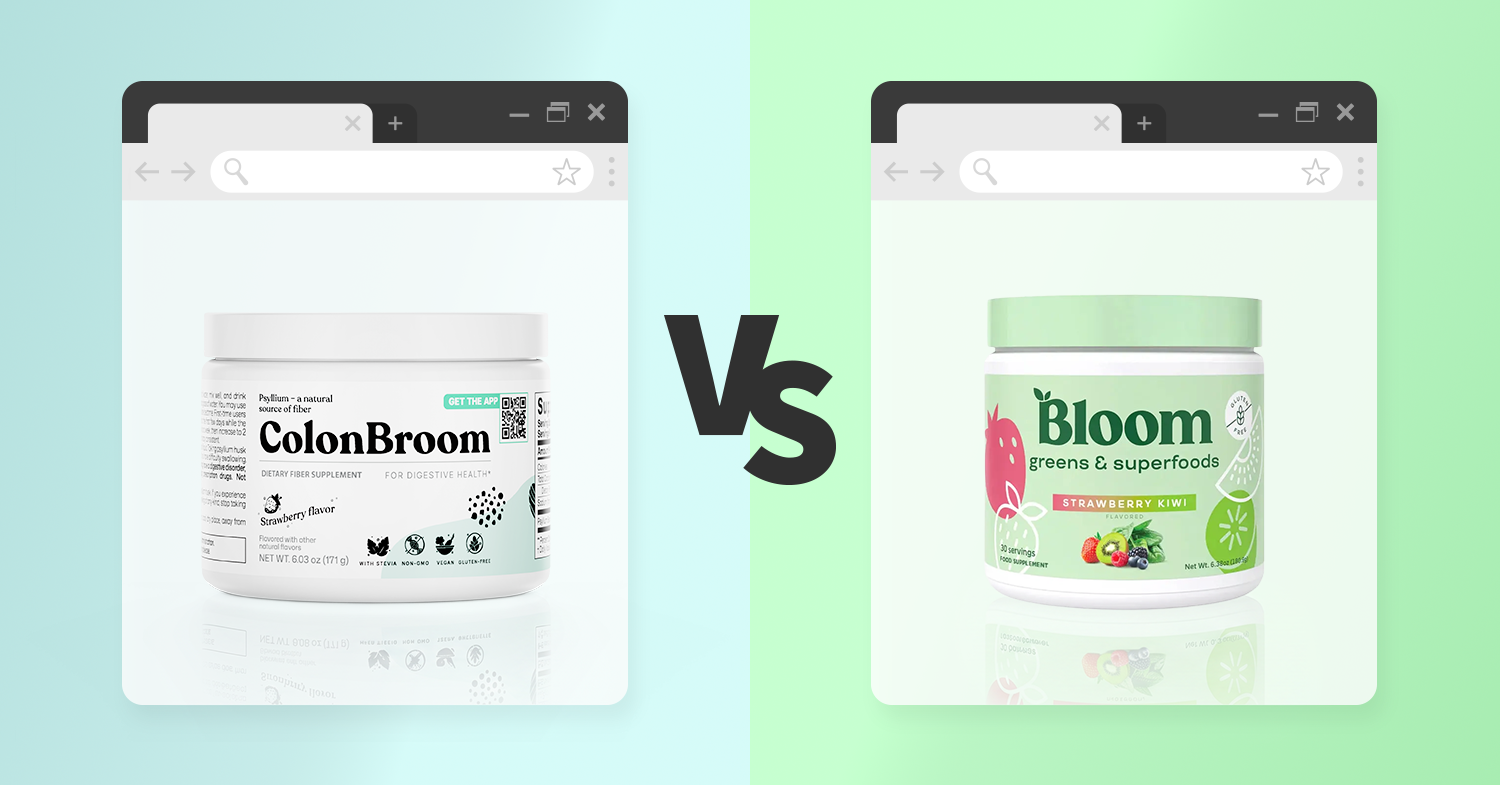
ColonBroom is a fiber supplement built to get your digestion back on track. It is a powder you mix with water, and its main ingredient is psyllium husk, a plant fiber pulled from the seeds of the Plantago ovata plant. Psyllium husk soaks up water in your gut and turns into a soft gel. That gel adds bulk to your stool, softens it, and helps it move through your system with less strain.
Alongside psyllium husk, ColonBroom contains pink Himalayan sea salt for sodium, citric acid, natural flavor, stevia leaf extract for sweetness, and organic rice hulls for extra texture and bulk.
What Is Bloom?
Bloom, often called Bloom Nutrition or Bloom Greens, packs in more than 30 ingredients instead of leaning on one fiber source. That includes green superfoods like spirulina and chlorella, digestive enzymes, prebiotics, probiotics, fruit and vegetable powders, and a small fiber blend made from chicory root, flaxseed, and apple powder.
Where ColonBroom is a focused fiber supplement, Bloom is closer to an all-in-one greens powder with a smaller side helping of fiber.
ColonBroom Ingredients: What’s Really Inside
A single scoop of ColonBroom (about 5.7 grams) contains around 20 calories, 3 grams of dietary fiber, 60 milligrams of sodium, and 3.6 grams of psyllium husk powder. That is the bulk of the formula. The rest is there for taste and texture: citric acid for tartness, natural flavor, stevia leaf extract instead of sugar, and organic rice hulls to help the powder blend smoothly and add a little extra fiber diversity.
Psyllium husk is a soluble fiber, which means it dissolves in water and forms a thick gel rather than passing through undigested. That gel is what makes psyllium such a common choice for constipation relief. Cleveland Clinic notes that psyllium husk can support constipation relief, blood sugar management, and cholesterol levels when taken consistently.
Bloom Ingredients: What’s Really Inside
Bloom’s ingredients list is fiber blend, made of chicory root, flaxseed, and apple fruit powder, comes in at around 1.6 grams per scoop, which is the single largest portion of the formula. Around that fiber blend, there’s a mix of nutritional grasses like barley grass and wheatgrass, blue-green algae in the form of spirulina and chlorella, digestive enzymes, and a probiotic blend that Bloom does not disclose in exact colony-forming units.
Bloom’s greens themselves make up only about 2 grams of the total scoop, and the label does not break down exactly how much of each ingredient you are getting. Registered dietitians who have reviewed the formula point out that this makes it hard to know if any single ingredient is present in a meaningful amount.
Flavor and Taste Test
ColonBroom leans into a simple, fruit-forward taste. Its strawberry flavor is one of its most popular options, made with real strawberry flavoring rather than an artificial fruit punch taste. Other flavors include tropical fruits and a strawberry-raspberry blend, and all of them mix into a smooth, slightly tart drink once you stir in the psyllium husk.
Bloom’s flavor lineup includes mango, watermelon, citrus, coconut, and strawberry kiwi. But it’s worth mentioning that because Bloom blends in greens like spirulina, its base flavor is earthier.
How to Use ColonBroom and Bloom
For ColonBroom, you mix one scoop into 12 to 14 ounces of water, drink it 30 minutes to an hour before a meal, and follow it with an extra glass of water. New users typically start with one scoop a day for the first week, then move up to two scoops a day if needed. ColonBroom should not be taken within two hours of bedtime, since the fiber needs time to move through your system.
Bloom also uses one scoop per serving, mixed into water, juice, or a smoothie. Most people take it in the morning, though the brand does not specify an exact time.
ColonBroom Reviews: What Real Users Say
ColonBroom holds a strong reputation among gut health supplements, with a 4-star average on Trustpilot across thousands of verified reviews. Users frequently mention reduced bloating, more consistent bowel movements, and noticeable changes within the first week of daily use. By the first month, many report steadier digestion and less reliance on the product to feel normal day to day.
Some reviews mention an early adjustment period with symptoms like gas or mild cramping, which is common when any fiber intake increases quickly.
Bloom Reviews: What Real Users Say
Bloom reviews average around 4 stars across major retailers, like Walmart and Amazon combined. Fans praise the taste, the energy boost some notice after their morning scoop, and a reduction in bloating with regular use.
On the critical side, some reviewers say Bloom’s bloating relief fades if they skip more than a few days, and a portion of one-star reviews mention no noticeable digestive change at all. A Forbes Health review of Bloom reaches a similar conclusion, where a dietitian quoted there explains that the small doses spread across so many ingredients likely add up to a mild boost of antioxidants and fiber rather than a dramatic health fix, and that the powder works best alongside whole foods rather than in place of them.
Is ColonBroom a Good Bloom Alternative?
If you have tried Bloom and found the fiber content too light to help your bathroom habits, ColonBroom works well as a Bloom alternative for anyone who wants a more concentrated, fiber-first approach. It focuses on one job done thoroughly, which is to get more soluble fiber into your day.
Side Effects and Safety to Know
Any new source of fiber can cause a short adjustment period, and both products carry similar warnings.
With ColonBroom, some people notice gas, bloating, or mild cramping in the first few days. This happens most often when the dose increases too quickly or when there is not enough water alongside it. These effects usually settle down within a couple of weeks as your gut adjusts.
Bloom’s side effects are mostly from its chicory root and apple powder, which can trigger symptoms in people who are sensitive to FODMAPs, a group of carbohydrates known to worsen IBS symptoms in some people.
Anyone with a diagnosed digestive condition should check the product label on either supplement and talk with a doctor before adding a new fiber source to their routine, particularly if they take prescription medication.
ColonBroom vs Bloom: Which One Should You Pick?
Choose ColonBroom if constipation, bloating, or irregular digestion are your main complaints and you want a supplement built specifically to fix them. Its higher psyllium husk content gives it a stronger, more direct effect on regularity than Bloom’s lighter fiber blend.
Choose Bloom if your digestive issues are mild rather than persistent.
Some people even use both, taking ColonBroom for its concentrated fiber and Bloom for its broader nutrient profile, though that means paying for two supplements instead of one.
Frequently Asked Questions
Which is better, ColonBroom or Bloom?
ColonBroom is the stronger pick for constipation, bloating, and general fiber intake because of its higher psyllium husk content. Bloom is the better pick if you want a supplement with greens and probiotics included. Neither one is universally better, since they are built to solve different problems.
Is ColonBroom actually good?
For most people looking to increase their fiber intake and improve regularity, yes. ColonBroom’s main ingredient, psyllium husk, is well studied and widely recommended by dietitians for constipation and digestive support. Reviews back this up, with a four-star average and consistent mentions of reduced bloating and steadier bowel movements.
Does Bloom actually work?
Bloom can help with mild bloating and digestive comfort thanks to its blend of fiber, digestive enzymes, and probiotics. Because the fiber and probiotic amounts are spread thin across 30-plus ingredients, it tends to work better as a general wellness supplement than as a fix for more stubborn digestive problems.
Do you lose weight with ColonBroom?
ColonBroom is not a weight loss drug, but its fiber can support appetite control by helping you feel full longer, which may reduce overeating over time. Combined with its role in metabolic support, some users report gradual weight changes alongside better digestion, particularly when they pair it with a balanced diet.
Related articles

Metabolism Boosting Foods That Actually Work (And Ones to Skip)
Your body burns calories all day long, even when you are doing nothing more exciting than scrolling on your phone. That calorie burn is your metabolism at work. Genetics play a role in how fast or slow your metabolism works, but what you eat plays a role too, and so does how you sleep, move, […]

Period Cravings: Why Your Body Wants All the Snacks (And What Actually Helps)
If you have ever stood in front of the fridge a few days before your period, completely convinced that only a block of cheese and a chocolate bar could fix your mood, you already know what period cravings feel like. One week you eat a salad without a second thought. The next week you would […]

Food Cravings Meaning: What Your Body Is Really Trying to Tell You
Food craving refers to that sudden pull toward one specific food, and it can feel almost impossible to ignore until you give in. Here’s the interesting part. Your cravings are not random. They often carry a message about what’s going on inside your body or your mind. Learning the meaning behind your urges can help […]
Subscribe to our newsletter!
Curious to know what your number two says about your health? Get juicy info and top-notch advice on tummy health, boosted colon tips, and more by joining the wondrous world of ColonBroom newsletters.
By providing your email address, you agree with the T&Cs and Privacy Policy



Take a quiz and get your personalised solution.