
ColonBroom vs Metamucil: A Comprehensive Comparison of the Fiber Supplements


Contents
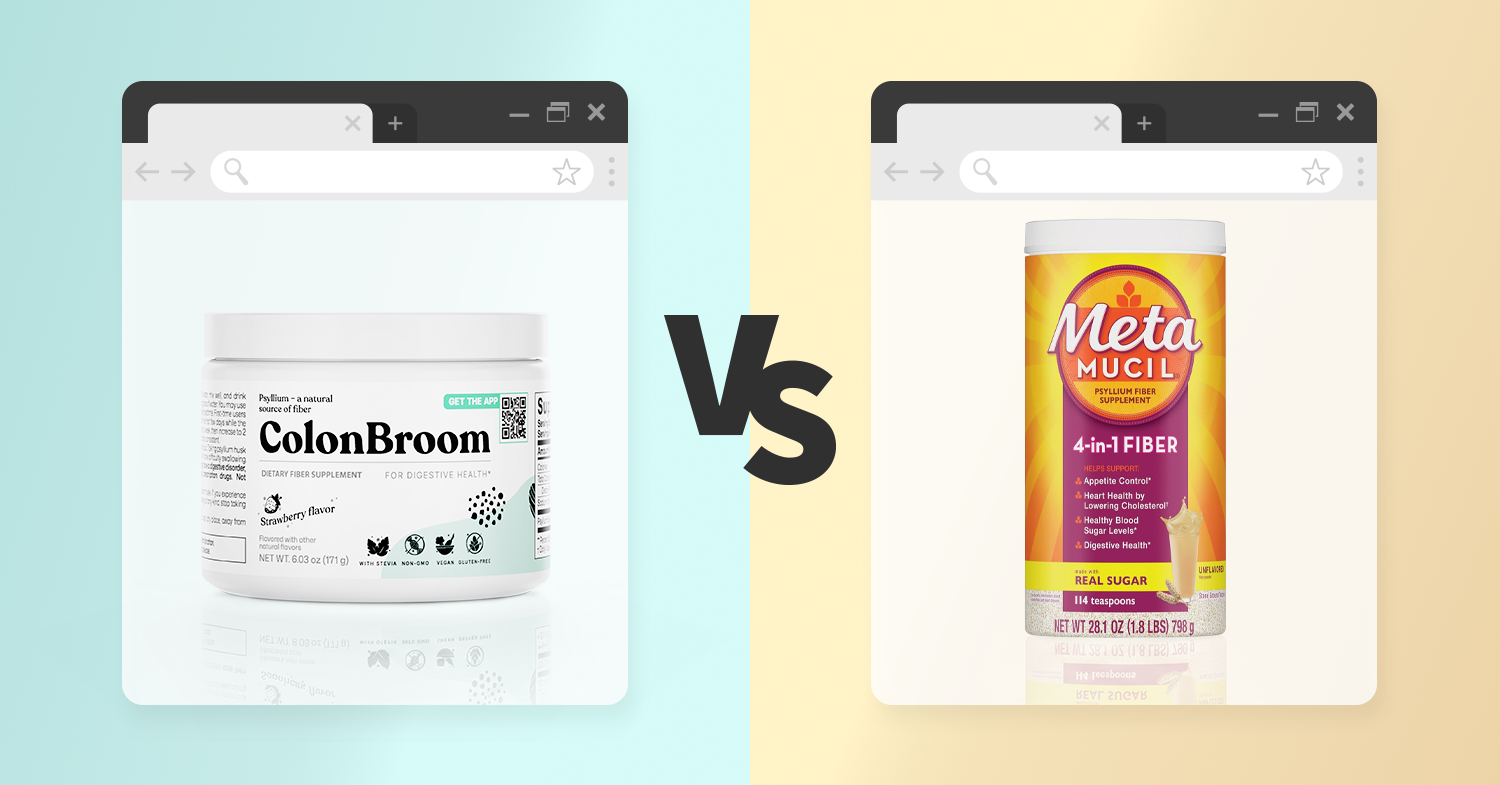
ColonBroom and Metamucil are fiber supplements built around the same plant-based fiber, but the experience of using them is different once you look past the label.
One is a fruity powder made for people who want a modern gut health routine. The other has sat on pharmacy shelves for decades and carries a long track record with doctors and dietitians.
This guide breaks down what’s inside each product and how they work for you to know which one fits your gut and your morning routine.
What Is ColonBroom?
ColonBroom is a dietary fiber supplement sold as a flavored powder. You mix a scoop into water and drink it once or twice a day. It works for relieving occasional constipation, easing bloating, and supporting weight management as part of a wider routine.
The main ingredient is psyllium husk, which makes up most of the formula. It’s a soluble, gel-forming fiber. It swells when it meets liquid, adds bulk to your stool, and helps waste pass more easily.
Other supporting ingredients include citric acid, natural flavoring, stevia leaf extract, sea salt, and rice hulls. You can see the full ingredient breakdown if you want the exact list.
ColonBroom puts more emphasis on flavor than most fiber brands. It comes in a few options, including a popular strawberry flavor, so it tastes closer to a fruit drink than a medicine. That’s a big part of why the brand has grown so fast, because customers enjoy the taste as much as the results.
What Is Metamucil? Metamucil Ingredients Explained
Like ColonBroom, Metamucil’s main ingredient is psyllium husk fiber, which comes from the seeds of the Plantago ovata plant. Metamucil sells it in the form of loose powder packets, capsules, and wafers, which gives customers more options.
The classic orange powder is mostly psyllium husk powder, with citric acid and sucrose or a sugar substitute added for taste. The capsules don’t have sugar at all and just pack the fiber into a swallowable form, which appeals to people who don’t want to mix a drink every day.
Health Benefits Beyond Constipation
Both supplements are backed by research. Soluble fiber from psyllium has been studied for its effect on cholesterol, and some research suggests it can lower LDL, the kind linked to heart disease, when taken daily alongside a normal diet.
Psyllium also slows how quickly sugar hits your bloodstream after a meal, which is why some people with blood sugar concerns add a fiber supplement before eating rather than after. It works by forming a thick gel in the stomach and small intestine that physically slows down digestion, so nutrients, including sugar, get absorbed at a steadier pace instead of all at once.
Some people also find that a fiber supplement helps them feel full longer between meals, which can make it easier to avoid snacking out of habit rather than real hunger. Neither product treats diabetes or high cholesterol on its own, so think of either one as a support tool alongside food and medication, not a replacement for either.
How Long Does Metamucil Take to Work?
Most people notice a bowel movement within 12 to 72 hours of starting Metamucil, according to the product’s own drug facts label. For long-term use, it can take around four weeks of consistent daily doses before you see the full benefit for regularity and cholesterol.
How Long Does ColonBroom Take to Work?
ColonBroom works on a similar timeline, since it relies on the same psyllium fiber. Some users report results within a day, while others need closer to a week for their gut to adjust. Anyone dealing with ongoing digestive disorders should talk to a doctor before starting either product, since fiber supplements aren’t a substitute for medical care.
Metamucil Dosage vs ColonBroom Dosage
Metamucil’s standard adult dose is one packet, about 3.4 grams of psyllium husk, mixed into at least 8 ounces of water, up to three times a day. For the capsule version, five capsules equals the equivalent of one powder packet. Kids between 6 and 11 typically take half that amount, and anyone younger should check with a doctor first.
ColonBroom recommends one scoop mixed into 8 to 12 ounces of water, once or twice daily, usually before meals. New users are told to start with a single scoop and build up slowly, since jumping straight to the full dose can cause gas and cramping.
Taste, Flavor, and Side Effects
Metamucil’s classic orange powder has a chalky, slightly gritty texture that some new users often dislike. Even the newer flavored versions still taste closer to a supplement than a treat.
ColonBroom deals with that complaint. Its strawberry flavor and tropical fruit options mix into a smoother, less gritty drink that tastes more like a fiber drink than a supplement, which is the main reason people who quit Metamucil in the past end up trying it.
Side effects are largely the same across both, because they share the same active ingredient. You may notice some gas, bloating, or mild cramping in the first few days while your gut adjusts. This usually fades within a week.
Metamucil Reviews vs ColonBroom Reviews
ColonBroom reviews lean heavily on taste and the subscription experience. Many users mention noticeable changes in regularity within the first couple of weeks and appreciate that it doesn’t taste medicinal. Some reviewers also credit the daily routine with helping curb snacking, likely thanks to the fullness that comes from a psyllium husk fiber drink before meals.
Metamucil reviews tend to focus on trust and consistency, though some complain about the texture and the sugar in the classic orange flavor. The capsule version gets praise from people who want the benefits without mixing a drink, while some reviewers note that swallowing five capsules at a time feels like a lot.
Who Should Be Careful With Either Supplement
Fiber supplements are generally safe for most healthy adults, but a few groups should talk to a doctor before starting ColonBroom, Metamucil, or any psyllium husk supplement. That includes anyone with a history of bowel obstruction, difficulty swallowing, Crohn’s disease, or other structural digestive disorders, since adding bulk to the gut can make those conditions worse instead of better.
People on blood thinners, diabetes medication, or thyroid replacement drugs should also check with a pharmacist first, since fiber can change how quickly the body absorbs those medications. Pregnant and breastfeeding users are usually fine with psyllium in normal doses, but it’s still worth a quick check with a doctor before adding any new supplement during pregnancy. And if constipation lasts more than a week despite daily use, or shows up alongside rectal bleeding or severe pain, that’s a sign to stop the supplement and get checked out rather than pushing through with a higher dose.
Which One Should You Choose?
If taste has always been the reason you quit fiber supplements before finishing the bottle, ColonBroom is built specifically to solve that problem.
The ColonBroom vs Metamucil decision really comes down to what matters more to you, whether proven history or taste and daily consistency. Some people even keep both on hand, capsules for travel days and a flavored powder for the rest of the week. Either way, the fiber itself works the same way once it’s in your gut, so there’s no wrong answer here, just a better fit for your habits.
Frequently Asked Questions
What Is Comparable to ColonBroom?
Metamucil is the closest match, since both rely on psyllium husk as the main fiber and both come in flavored, mixable formats. Plain psyllium husk powder from any pharmacy offers nearly identical benefits for a fraction of the price, if you don’t mind measuring it out yourself.
What Is the Downside of Metamucil?
The main downsides are the gritty texture, added sugar in the classic flavors, and the need to drink plenty of water with every dose to avoid choking or an upset stomach. It can also interfere with how your body absorbs certain medications, so timing matters if you take prescriptions. Some users also report gas and bloating in the first week, which is common with any bulk-forming laxative.
What Is the Healthiest Fiber Supplement to Take?
Psyllium husk has the strongest research behind it among fiber supplements, with evidence supporting its role in easing constipation, lowering cholesterol, and steadying blood sugar. Whichever brand you choose, a plain soluble fiber supplement without added sugar or artificial dye is generally the healthiest pick.
Is ColonBroom a GLP-1?
The original ColonBroom powder is a fiber supplement, not a GLP-1 medication. The brand does sell a separate product called the GLP-1 Booster, a capsule formula built around berberine and other plant extracts meant to support the body’s natural GLP-1 signaling. It doesn’t contain semaglutide, tirzepatide, or any prescription drug, so it isn’t a GLP-1 medication in the way Ozempic or Wegovy are. It’s a supplement formulated to work alongside your body’s own systems, not replace a prescription.
Related articles

Metabolism Boosting Foods That Actually Work (And Ones to Skip)
Your body burns calories all day long, even when you are doing nothing more exciting than scrolling on your phone. That calorie burn is your metabolism at work. Genetics play a role in how fast or slow your metabolism works, but what you eat plays a role too, and so does how you sleep, move, […]

Period Cravings: Why Your Body Wants All the Snacks (And What Actually Helps)
If you have ever stood in front of the fridge a few days before your period, completely convinced that only a block of cheese and a chocolate bar could fix your mood, you already know what period cravings feel like. One week you eat a salad without a second thought. The next week you would […]

Food Cravings Meaning: What Your Body Is Really Trying to Tell You
Food craving refers to that sudden pull toward one specific food, and it can feel almost impossible to ignore until you give in. Here’s the interesting part. Your cravings are not random. They often carry a message about what’s going on inside your body or your mind. Learning the meaning behind your urges can help […]
Subscribe to our newsletter!
Curious to know what your number two says about your health? Get juicy info and top-notch advice on tummy health, boosted colon tips, and more by joining the wondrous world of ColonBroom newsletters.
By providing your email address, you agree with the T&Cs and Privacy Policy



Take a quiz and get your personalised solution.