
ColonBroom vs MiraLAX: Which is Best for Constipation and Bloating?


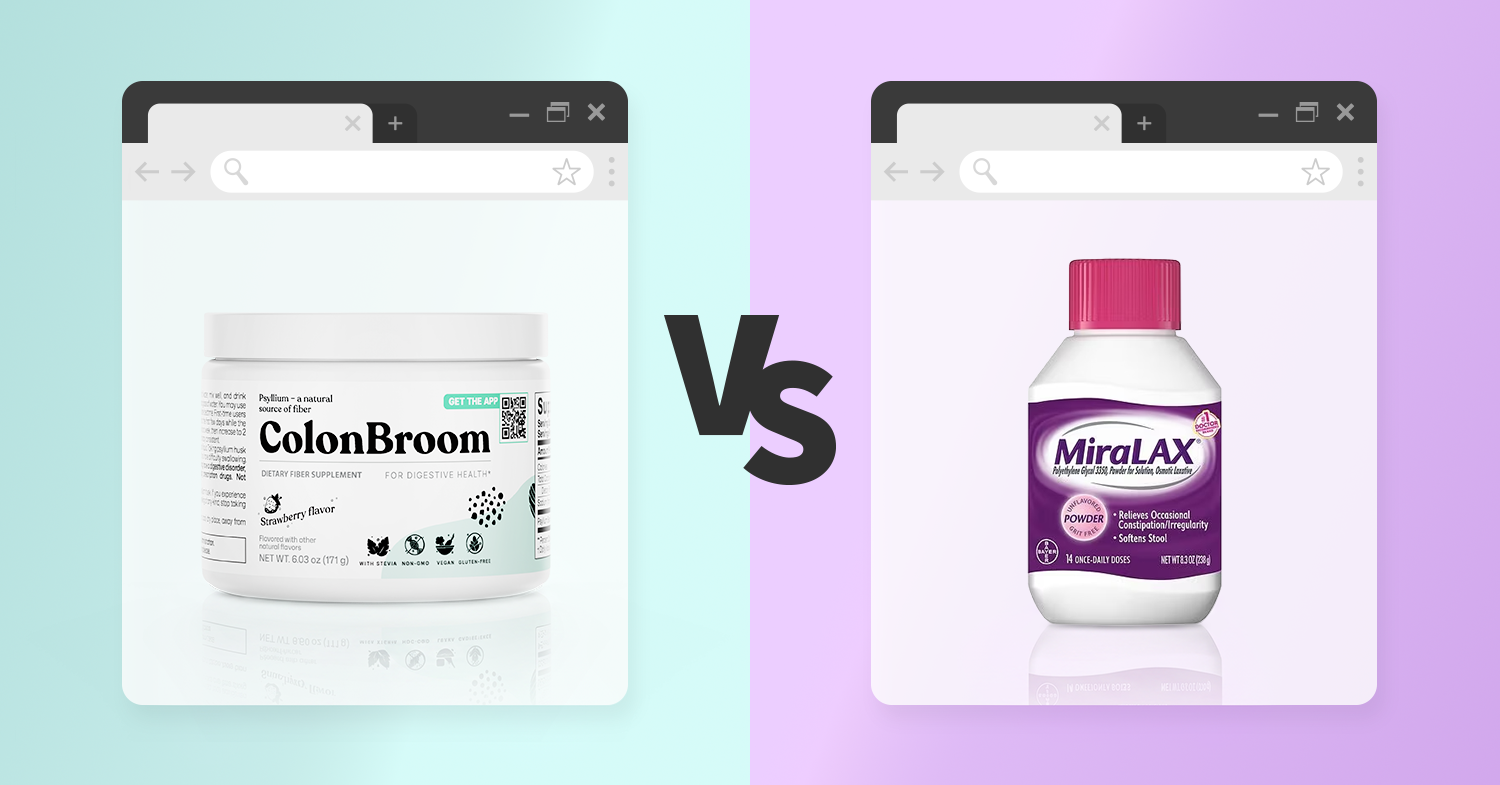
ColonBroom and MiraLAX are both popular solutions for constipation, but they work in completely different ways. One is designed for quick relief, while the other focuses on long-term digestive support. If you’re trying to decide between the two, here’s what you need to know before choosing.
Contents
If your stomach feels stuck, ColonBroom and MiraLAX both claim to get you to the bathroom without pain or bloating. The two products work in different ways, and that’s what this article clarifies. Let’s break down what each product actually contains, how fast each one works, what real reviews say, and who should go for either product.
ColonBroom vs MiraLAX: The Short Answer
ColonBroom is a fiber supplement that uses psyllium husk, a plant fiber that soaks up water and turns into a gel as it moves through your gut. It is designed to be taken every day to ease gut issues in the long-term instead of a one-time fix.
MiraLAX is a laxative you can pick up at any pharmacy. Its active ingredient is polyethylene glycol 3350, a compound that pulls water into your colon so stool softens and passes more easily. It works fast, usually within one to three days, and it is built for short bathroom emergencies rather than daily use.
MiraLAX solves today’s problem fast. ColonBroom works toward stopping that problem from coming back. Below, you can see exactly how each one holds up.
What Is MiraLAX?
MiraLAX is an over-the-counter product sold specifically for occasional constipation. It belongs to a drug class called osmotic laxatives, which pull water into the bowel through osmosis instead of forcing your intestinal muscles to contract the way harsher stimulant laxatives do.
The powder has no taste and dissolves in almost any drink, hot or cold. It is gluten-free, sugar-free, and free of preservatives. That said, it is only labeled for people age 17 and up, and the packaging warns against use for more than seven days unless a doctor says otherwise.
MiraLAX only has one listed ingredient, polyethylene glycol 3350, at 17 grams per dose. There are no inactive fillers in the powder. PEG 3350 is not absorbed into your bloodstream in any meaningful way. It stays in your gut, binds to water, and moves through your system largely unchanged. That single-ingredient formula is part of why doctors consider it gentle, though it is still a synthetic compound rather than something you would find in food.
What Is ColonBroom?
ColonBroom is designed as an intervention for ongoing gut issues. It is a fiber supplement meant to be taken every day to ease constipation, bloating, and boost your metabolism.
The main ingredient is psyllium husk powder, taken from the seeds of the Plantago ovata plant. Instead of pulling water from your body into your bowel the way MiraLAX does, psyllium husk absorbs water it meets along the way and swells into a soft gel. That gel adds bulk to stool, which helps it move through your intestines more smoothly.
Beyond the psyllium husk, ColonBroom is flavored with natural flavor, citric acid, stevia leaf extract, sea salt, and rice hulls, giving it a lemonade-like taste instead of the gritty texture some fiber powders have. These are natural ingredients, without any synthetic laxative added to the mix. Because psyllium is a soluble fiber, it does more than relieve constipation. Research links it to lower cholesterol, steadier blood sugar, and better overall health markers when used regularly. It can also slow gastric emptying slightly, which is part of why people report feeling fuller for longer after taking it.
How Long Does MiraLAX Take To Work vs How Long Does ColonBroom Take?
MiraLAX takes one to three days for most adults, according to the product label and clinical research on polyethylene glycol. Some people notice results within 12 to 24 hours, especially if they are already drinking enough water.
ColonBroom typically works within 12 to 72 hours for a single dose, but its bigger benefits build up over days and weeks of consistent use rather than a single dose. Since psyllium husk works by drawing water into itself and forming bulk, it needs a bit of time and enough fluid intake to do its job properly.
MiraLAX Dosage vs ColonBroom Dosage
The standard MiraLAX dosage for adults is 17 grams once a day, measured using the marked cap or a single packet, dissolved into 4 to 8 ounces of any beverage. The label says not to use it for more than seven days without talking to a doctor first, since ongoing constipation can sometimes point to a bigger issue.
ColonBroom is typically taken as one to two scoops a day, each containing around 3.6 grams of psyllium husk, mixed with water and consumed before meals. Unlike MiraLAX, there is no seven-day cap. ColonBroom is built for a daily dose you can keep taking as part of your regular diet, similar to how you might take a multivitamin. As with any fiber supplement, it works best alongside plenty of water, since fiber without enough fluid can actually make constipation worse instead of better.
Common Side Effects Compared
Both products can cause some mild discomfort, especially in the first few days of use, so it helps to know what to expect from each one before you start.
With MiraLAX, the common side effects include bloating, gas, nausea, and stomach pain. These are usually mild and pass on their own. The bigger concern is with long-term, unsupervised use. Taking it daily for weeks without medical guidance can lead to electrolyte imbalances, which in rare cases can affect your heart rhythm. People allergic to polyethylene glycol should avoid it completely, and anyone with kidney disease should only use it under a doctor’s care.
ColonBroom’s side effects look similar on the surface. You may get gas, bloating, and mild cramping during the first week as your gut adjusts to more fiber.
It is worth noting that neither product is technically classified as one of the stool softeners you might see on a pharmacy shelf, like docusate. MiraLAX is an osmotic laxative, and ColonBroom is a fiber supplement, and both work by different routes than a stool softener does.
What MiraLAX Reviews Say
Most MiraLAX reviews describe it as reliable and fast-acting. The main complaints tend to center on the seven-day limit. People with ongoing, chronic constipation often say they wish they had a daily option that did not come with that same restriction.
That gap is exactly where ColonBroom often gets positive feedback. Reviewers, including a hands-on Forbes Health test, described the flavor as pleasant and reported easier, more regular bowel movements after a few days of consistent use, with mild bloating in the first three or four days that settled down after that.
Is ColonBroom a Good MiraLAX Alternative?
If you are searching for a MiraLAX alternative because you need something for everyday use rather than a quick rescue plan, ColonBroom is a perfect fit. It is built for long-term use, made from a well-studied natural fiber, and comes with side benefits like potential cholesterol and blood sugar support that MiraLAX simply does not offer, since MiraLAX only targets water movement in the colon.
MiraLAX vs ColonBroom: Final Verdict
There is no single winner in the ColonBroom vs MiraLAX debate, because the two products are not solving the same problem. MiraLAX is the better pick when you need fast, short-term relief and you plan to stop within a week. ColonBroom fits better if your goal is building a daily fiber habit that supports your gut over months, not just days.
If constipation lasts longer than two weeks, or shows up with severe pain, blood, or unexplained weight loss, talk to a doctor before trying any laxative or fiber supplement.
Frequently Asked Questions
Is psyllium husk better than MiraLAX?
It depends on what you need. In clinical comparisons, polyethylene glycol formulas like MiraLAX have shown faster and sometimes stronger results for short-term constipation relief than psyllium husk. But psyllium husk offers wider benefits for daily gut health, cholesterol, and blood sugar, which makes it a better long-term pick for people who are not dealing with a one-off emergency.
Is ColonBroom actually good for you?
For most healthy adults, yes. Psyllium husk is one of the most researched fibers available and is linked to real digestive and metabolic benefits when taken consistently with enough water. Results can vary from person to person, and mild bloating or gas in the first week is common and normal.
Is ColonBroom just psyllium husk?
Psyllium husk powder is the core active ingredient, but ColonBroom also includes small amounts of natural flavor, citric acid, stevia leaf extract, sea salt, and rice hulls for taste and texture. There is no added synthetic laxative in the formula, so the fiber itself is doing the actual work.
Can you take MiraLAX every day?
Generally, no. The label instructs against using MiraLAX for more than seven days without a doctor’s supervision. Under a doctor’s care, it can be used daily for longer stretches, sometimes up to several months, for chronic constipation. Taking it daily on your own beyond a week is not recommended, since ongoing symptoms could point to something that needs a proper diagnosis rather than repeated laxative use.
Related articles

Metabolism Boosting Foods That Actually Work (And Ones to Skip)
Your body burns calories all day long, even when you are doing nothing more exciting than scrolling on your phone. That calorie burn is your metabolism at work. Genetics play a role in how fast or slow your metabolism works, but what you eat plays a role too, and so does how you sleep, move, […]

Period Cravings: Why Your Body Wants All the Snacks (And What Actually Helps)
If you have ever stood in front of the fridge a few days before your period, completely convinced that only a block of cheese and a chocolate bar could fix your mood, you already know what period cravings feel like. One week you eat a salad without a second thought. The next week you would […]

Food Cravings Meaning: What Your Body Is Really Trying to Tell You
Food craving refers to that sudden pull toward one specific food, and it can feel almost impossible to ignore until you give in. Here’s the interesting part. Your cravings are not random. They often carry a message about what’s going on inside your body or your mind. Learning the meaning behind your urges can help […]
Subscribe to our newsletter!
Curious to know what your number two says about your health? Get juicy info and top-notch advice on tummy health, boosted colon tips, and more by joining the wondrous world of ColonBroom newsletters.
By providing your email address, you agree with the T&Cs and Privacy Policy



Take a quiz and get your personalised solution.